For heads of delivery, engineering managers, and agency teams

Before you commit
the date, test the team
against the work

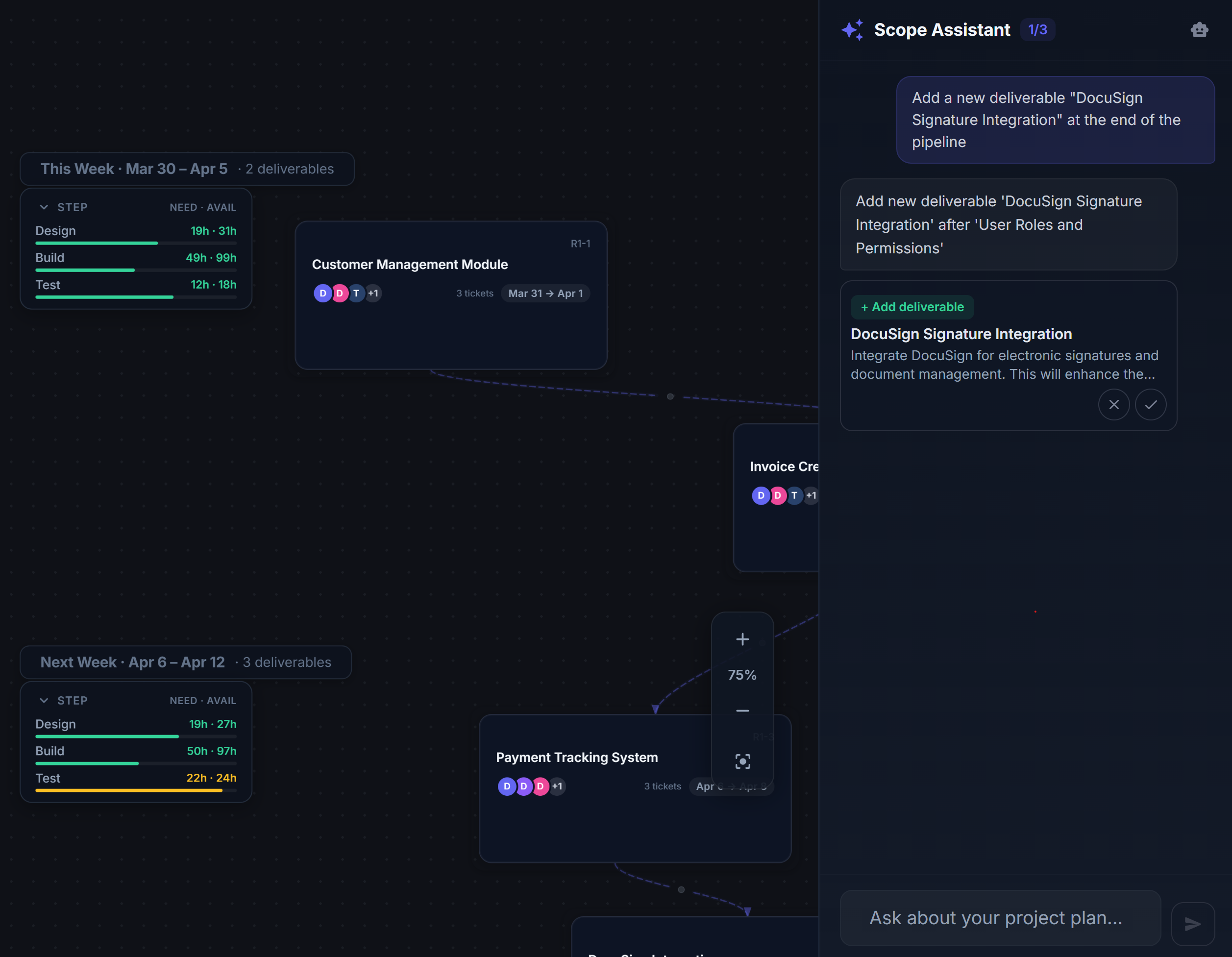
Model staffing, availability, and scope changes before you commit a delivery date.
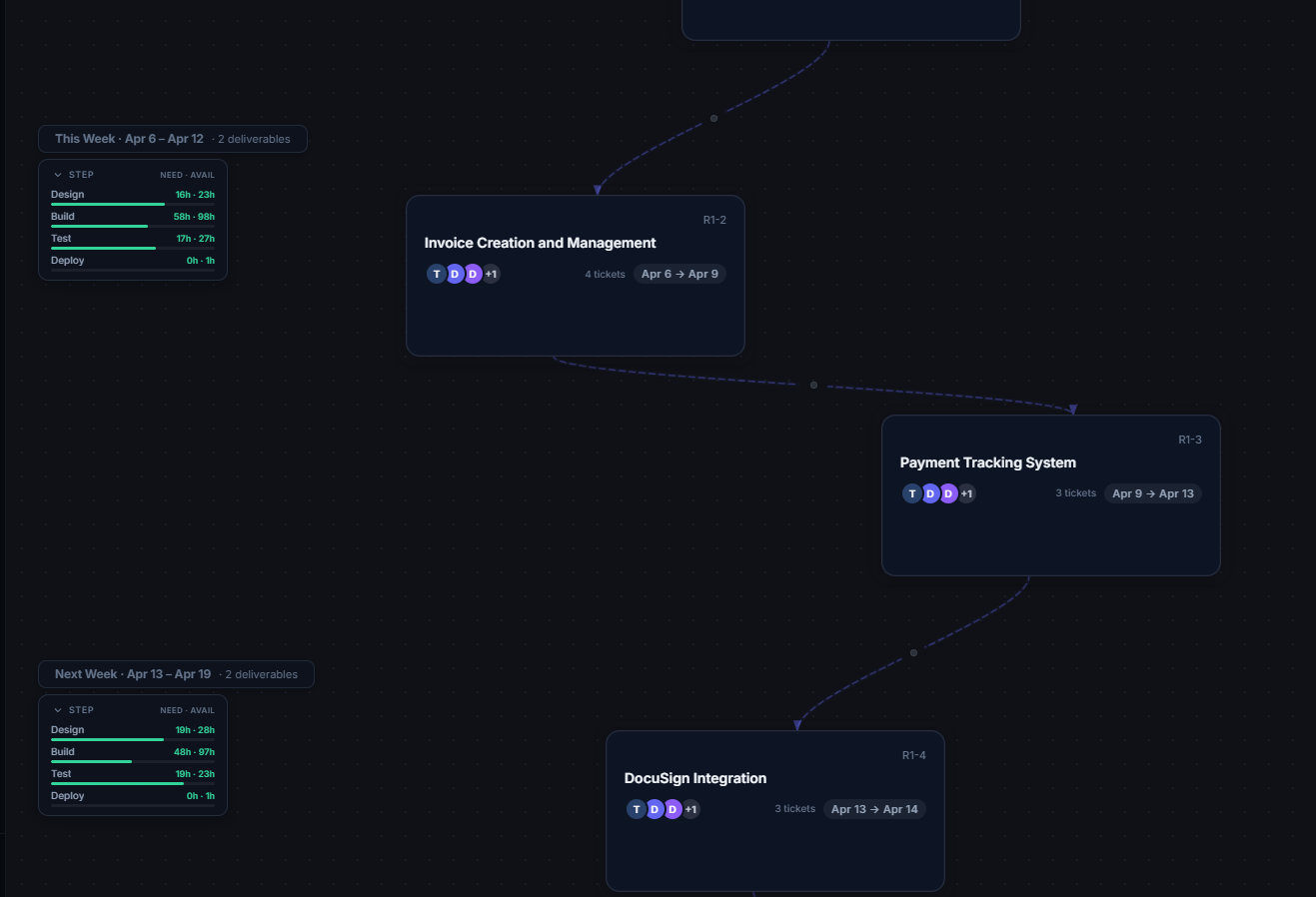
Delivery pipeline
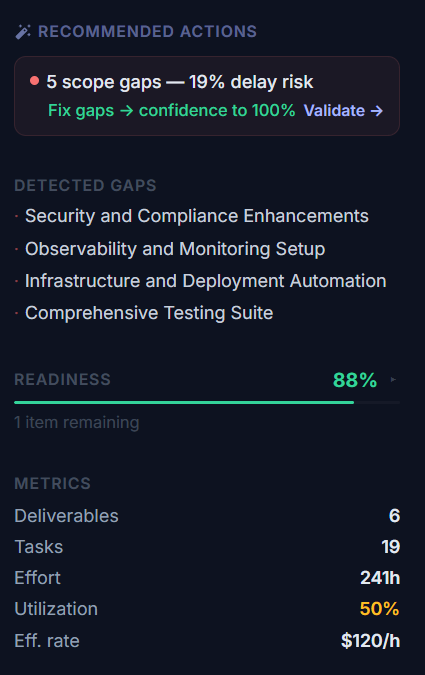
Metrics
capacity-based timeline delivery confidence
The problem

When delivery gets committed by instinct, the team pays for it

You promise a date before capacity is clear

Availability and dependencies were never really tested.
The timeline gets agreed before workload, sequencing, and staffing are modeled.

You know the team is overloaded

But you do not have a model that proves it.
Leadership hears opinions. You need something concrete that shows what actually slips.

Every staffing or scope change becomes guesswork

One missing person can quietly move the plan.
New work, lower availability, or role gaps shift timing without anyone seeing the full impact.
Without simulation
Spreadsheet estimate
Static Gantt
No staffing model
Verbal alignment
With Motionode
Capacity-aware pipeline
Per-person workload
Staffing recalculated
Delivery confidence
The staffing case

Need to prove you need more people? Show what slips if headcount stays flat.

Simulate the current team, compare it to a staffed scenario, and show the effect on delivery date, workload, and confidence.

Current team

See overload, timeline stretch, and delivery risk.

+1 or +2 hires

Compare how staffing changes the delivery window.

Decision-ready view

Use a visual model instead of opinions.

Current team
Higher risk
Current team
0 devs
241h planned
0% util
Apr 23 end
critical path exposedhigh team loadApr 23 end
+1 Backend dev
Lower risk
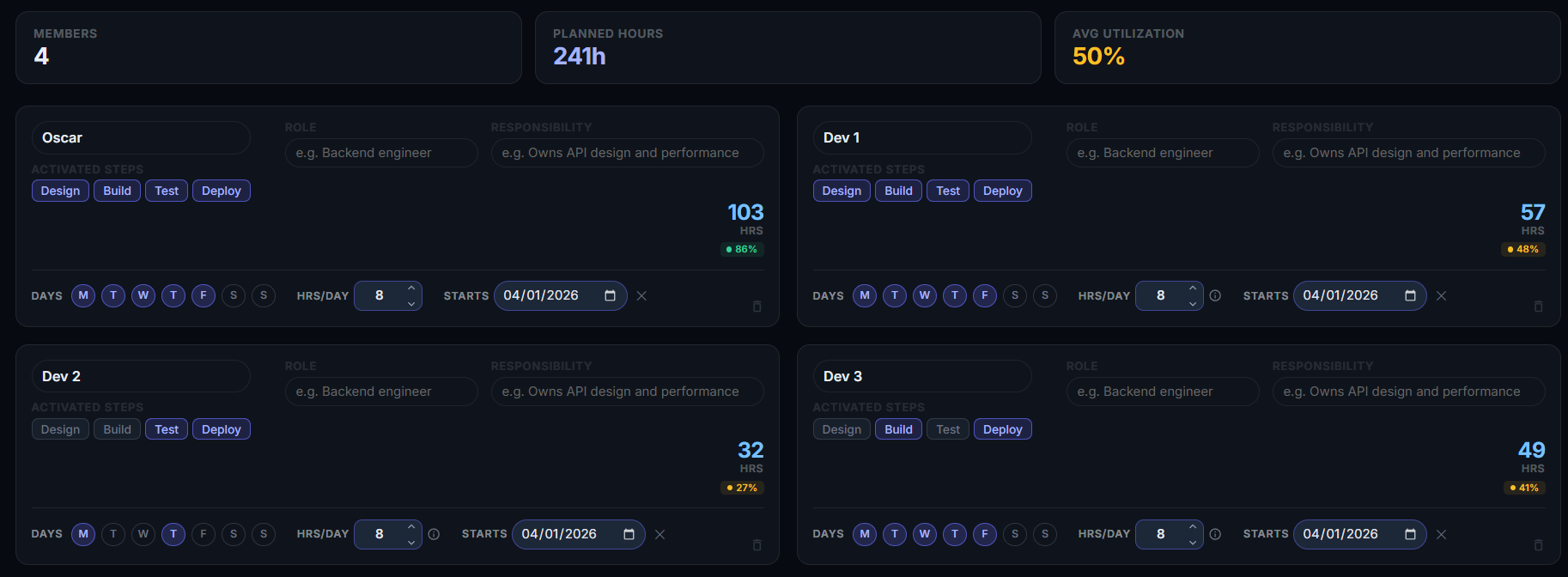
Members
0
Oscar
66%
Dev 1
48%
Dev 2
27%
Dev 3
41%
+ New
38%
0 devs
241h planned
0% util
Apr 14 end
buffer on critical pathlower loadApr 14 end
One added hire reduces projected delivery by 9 days and lowers overload on the critical path.
Core capabilities

What Motionode helps delivery leaders answer

Timeline

Can this team hit the deadline?

Test dates against real capacity.
See whether the current team can actually finish on time before you commit.
Team

What happens if I add or remove one person?

Compare staffing impact instantly.
See how team changes affect duration, utilization, and flow.
Validate

Where is the overload or bottleneck?

Find the work driving delivery risk.
Spot the people, steps, or deliverables creating pressure on the plan.
Metrics

What changes when scope changes?

Model the impact before saying yes.
See how added work affects timing, effort, and risk before the team absorbs it.
Staffing scenarios

Compare staffing scenarios in minutes

Model different team shapes before making commitments.

Scenario A

Current team
Duration3 weeks
Team size4 devs
Utilization50%
Readiness 88%
Delivers on time, but one absence or scope addition causes a slip.
readiness 88%marginal bufferno slip yet

Scenario B

+1 backend dev
Duration2.5 weeks
Team size5 devs
Utilization42%
Readiness 96%
Lower bottleneck risk. Critical path has buffer.
readiness 96%low riskno slip

Scenario C

Lower availability
Duration4+ weeks
Team size4 devs
Utilization74%
Readiness 68%
Deadline slips. Team overloaded on the critical path.
readiness 68%high riskslips
How it works

How delivery simulation works

1
Start

Start with the work

Use an existing plan, requirements, or a sample project.

Import from Notion, Jira, or paste requirements directly.
2
Team

Model the real team

Adjust people, days, hours, and responsibilities.

Set per-person availability, active steps, and start dates.
3
Validate

See what slips

Flow, timing, utilization, and risk update live.

Motionode recalculates the plan as the scenario changes.
4
Decide

Decide what to change

Change staffing, reduce scope, or defend a later date.

Compare scenarios side by side before committing.
Built for delivery

Built for real delivery planning, not static project charts

Motionode models work as delivery flow with team capacity behind it.

How work moves through the plan
How staffing affects actual delivery time
Where utilization and sequencing create risk
What changes when scope or availability changes
Pipeline dependency-aware flow delivery order timeline impact critical workload
Schedule & capacity

Turn staffing assumptions into a real schedule

Adjust availability and see the timeline respond.

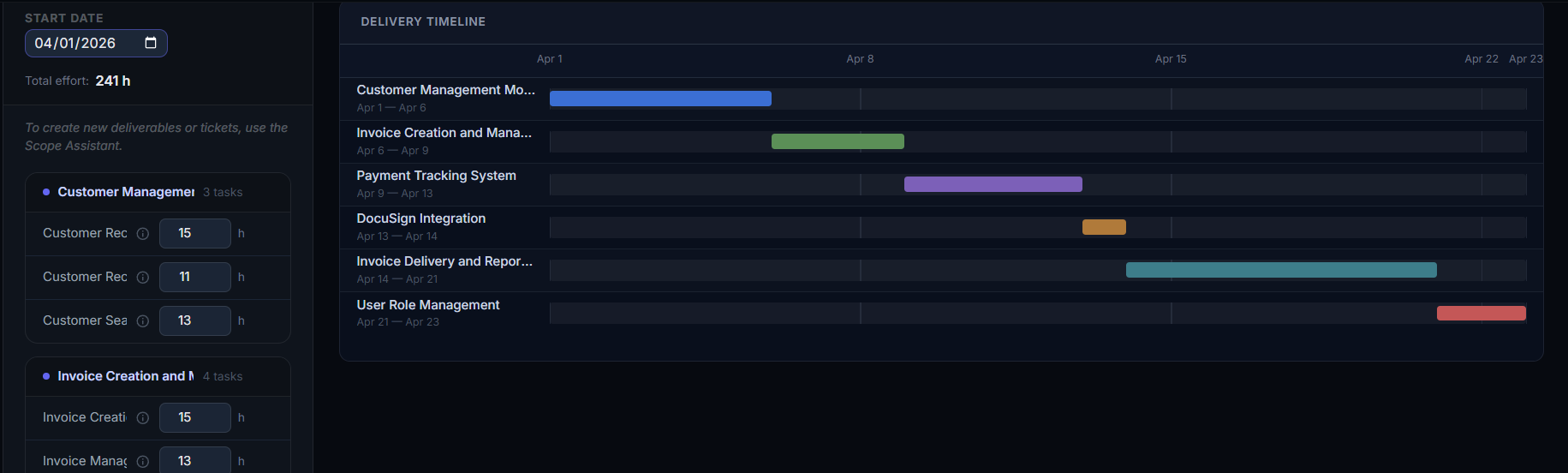
Schedule
0
Planned hours
Based on current scope
Apr 23
Projected end date
Updates with staffing changes
0
Avg utilization
Average across active team
Scope changes

Also useful when scope changes mid-plan

If new work is added after planning starts, Motionode shows the impact on timeline and risk before the team absorbs it.

Before change
3 weeks · 19 tasks · 4 devs
Customer Mgmt
Wk 1
Invoice
Wk 2
Payment
Wk 2
DocuSign
Wk 2
Reports
Wk 3
Roles
Wk 3
on schedule19 tasks
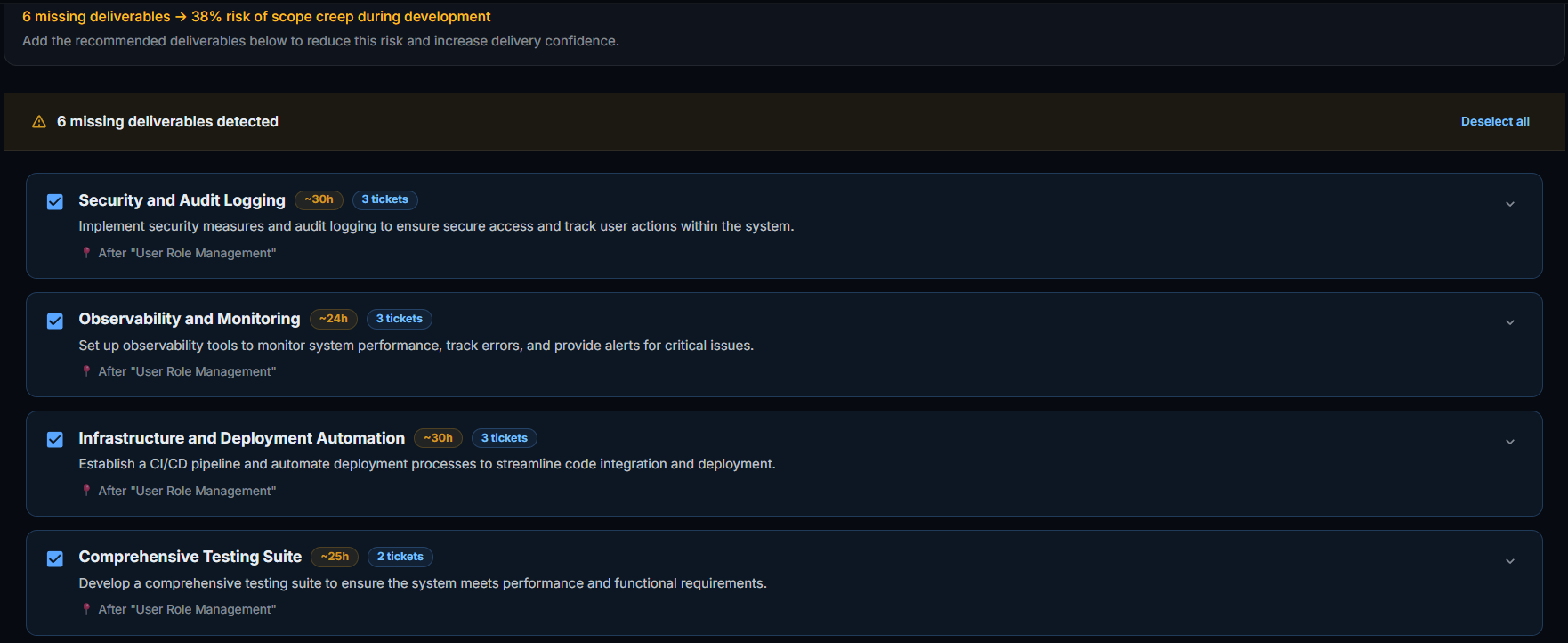
After adding requirement
4+ weeks · 24 tasks · 4 devs
+1 week+5 tasks
Customer Mgmt
Wk 1
Invoice
Wk 2
Payment
Wk 2
New Feature
Wk 3+
DocuSign
Wk 3
Reports
Wk 4
Roles
Wk 4
+1 week+5 taskshigher risk

Use it for staffing decisions, deadline decisions, and scope change conversations.

Using AI-assisted development? Model that too.

Compare delivery scenarios with different execution assumptions.

Use it to model planning impact, not to guess productivity.
Built for

Who uses this

Heads of Delivery

Defend dates and staffing with data, not gut feel.

Engineering Managers

Show workload reality before the team gets overloaded.

Agency Owners

See whether the timeline matches actual delivery capacity.

Operations / Resource Leads

Compare staffing options and balance confidence against cost.

Before you commit the date, simulate it

Use a sample delivery plan to test staffing, availability, and timeline risk.

Start with a working sample. Change team size, availability, and scope inside the app.