Paste scope
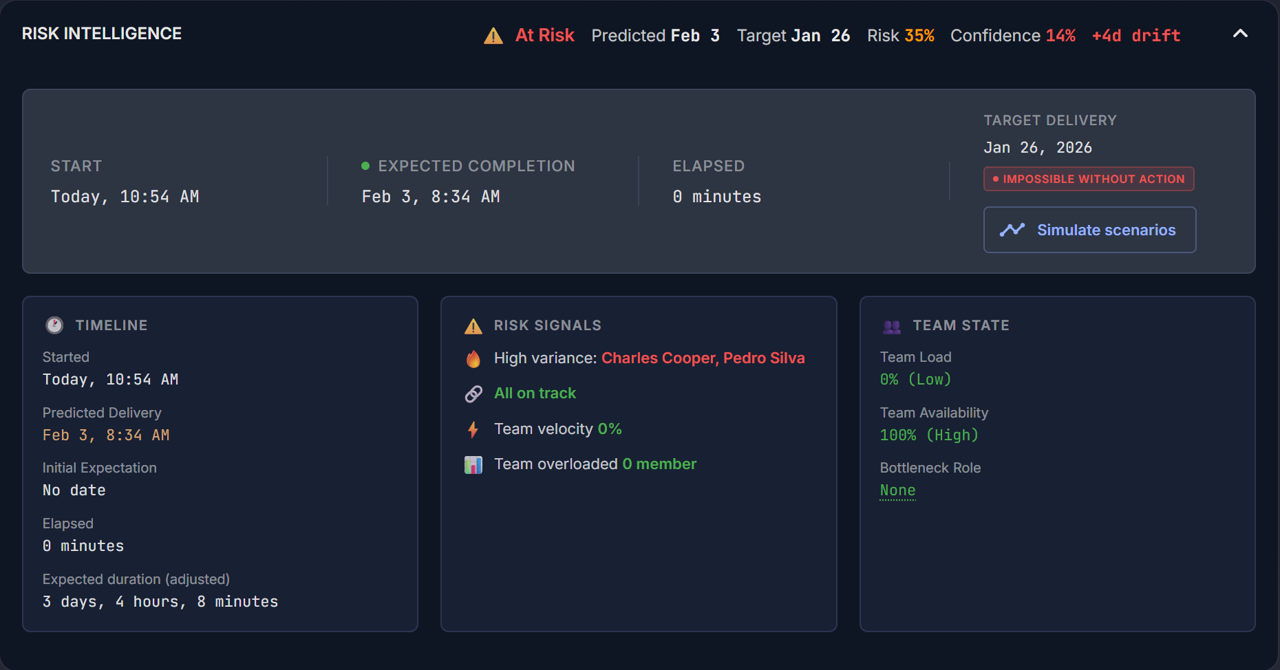
Turn a PRD/RFP/SOW into a delivery model that shows who becomes the bottleneck, what slips, and why — with scenarios to keep the date.
No login required. Works with rough scope. You can use placeholder capacity.
Download a sample Risk Intelligence Report generated from a real Delivery Risk analysis.
Download example report (PDF)
You can build a roadmap in Jira or Asana, but delivery still becomes debate because the system isn’t modeling capacity at the level you need and how dependencies consume the same people across parallel work.
Backed by public conversations in Reddit’s Jira threads and Atlassian Community around individual vs team-level capacity.
These are pulled from public Reddit and Atlassian Community threads about Jira capacity planning.
Motionode turns scope into a dependency-aware plan, then applies role capacity and member throughput to compute timelines and risk. When scope changes, it recomputes the cascade—because the same people can’t be in two critical paths at once.
Atlassian’s own guidance says realistic plans depend on estimation units, dependencies, and scheduling rules. Motionode is essentially that engine, grounded in per-member throughput instead of static guesses.
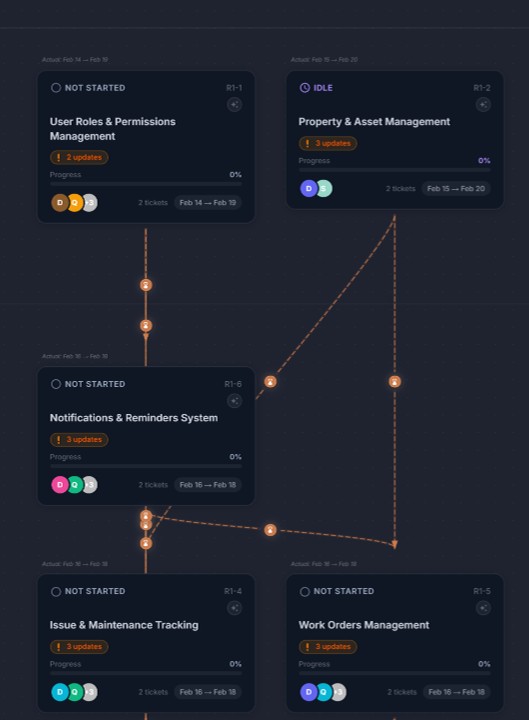
Exports available for sharing and internal documentation.
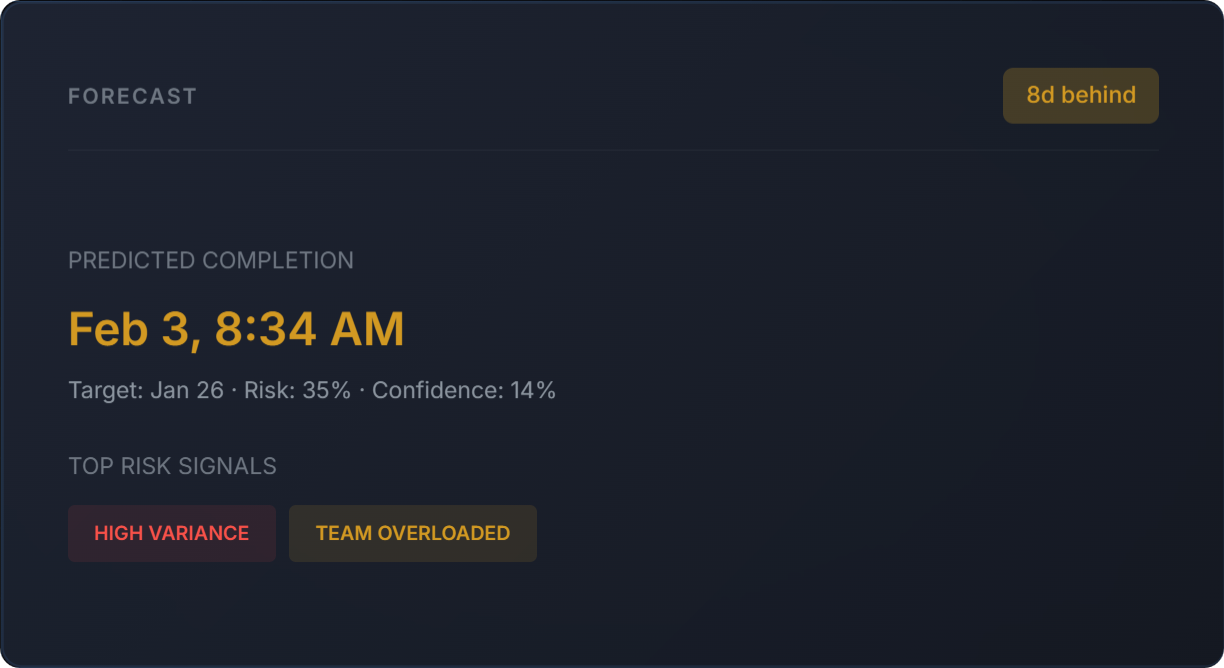
This isn’t a one-time plan. As work moves, Motionode updates throughput per role and member and recomputes delivery risk automatically.
Most “capacity plans” die the moment reality changes. Motionode stays current because the team works from the plan: when steps move, durations complete, or priorities change, the model recalculates bottlenecks and date risk in real time.
Start with placeholder capacity to explore. To get live risk intelligence, the team needs to run work through Motionode.
Paste scope → set target date + capacity → get a computed risk view (no login).
First project is free (limited scope). No credit card.